-

RSS Feeds
-
Categories
- 19
- Benefits
- Branding
- Business Networking
- Business News
- Business Opportunities
- Business Plan
- business travel
- Career Success
- Cause Marketing
- Communication Skills
- Cost Effectiveness
- Customer Service
- Database Solutions
- Employee Relations
- Entrepreneurship
- Finance
- Freelance Work
- Global Business
- Human Resources
- Information Technology
- Internet Marketing
- Leadership
- Management
- Marketing
- Negotiation
- Occupations
- Operations
- Productivity
- professional development
- Public Relations
- purchasing
- Quality Management
- Recommended Reading
- Recruiting
- Safety
- Sales
- Seminars – MTI Business Solutions
- Stress Management
- Technology
- Trade Shows
- Training
- Work Life Balance
- Work Space
-
Archives
- October 2013
- September 2013
- August 2013
- July 2013
- June 2013
- May 2013
- April 2013
- March 2013
- February 2013
- January 2013
- December 2012
- November 2012
- October 2012
- September 2012
- August 2012
- July 2012
- June 2012
- May 2012
- April 2012
- March 2012
- February 2012
- January 2012
- December 2011
- November 2011
- October 2011
- September 2011
- August 2011
- July 2011
- June 2011
- May 2011
- April 2011
- March 2011
- February 2011
- January 2011
- December 2010
- November 2010
- October 2010
- September 2010
- August 2010
- July 2010
- June 2010
- May 2010
- March 2010
- February 2010
- December 2009
- November 2009
- October 2009
- September 2009
- August 2009
- July 2009
- June 2009
- May 2009
- April 2009
- March 2009
- February 2009
- January 2009
- December 2008
- November 2008
- October 2008
- September 2008
- August 2008
- July 2008
-
Meta
-
Links
- Daily Career Connection
- MTI Business Solutions
- Online Training
- Training Classes Directory
- Grote Consulting
- Database Development Services
- Website Design & E-mail Marketing
- Online Business Classes
- Jobs and Careers
- Busines Job Openings
-
Tags
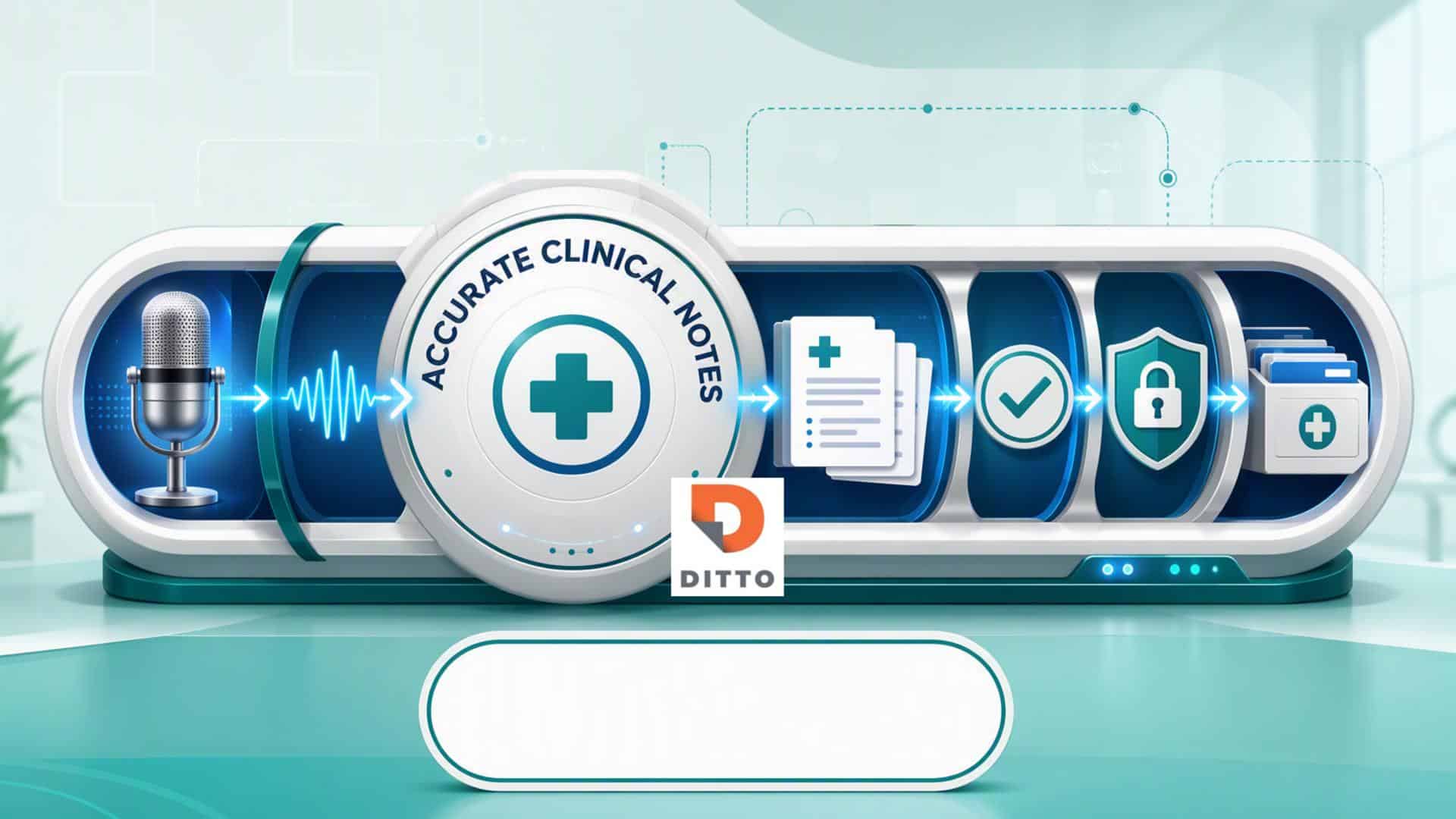
Best Medical Transcription Services: HIPAA Compliant Human Transcription Medical Dictation 2026, Top Providers for Healthcare Teams
Clinical documentation can take many forms, from physician dictation and professionally prepared transcripts to speech recognition and ambient AI-generated notes. Healthcare organisations researching the **best medical transcription services HIPAA compliant human transcription medical dictation 2026 ** options therefore need to consider more than how quickly spoken words become text. Accuracy, HIPAA safeguards, handling of protected health information, human review, specialty knowledge, EHR compatibility, turnaround times, and accessible support can all influence how well a provider fits daily clinical workflows. HIPAA establishes federal protections for medical records and other individually identifiable health information, making security an essential consideration whenever patient data is involved.
The 10 companies below represent different approaches to healthcare documentation. Some remain closely aligned with traditional medical transcription and human-reviewed dictation, while others use AI to generate structured notes from clinical conversations or provide broader clinical documentation platforms. Those distinctions matter. A practice that needs a finished transcript prepared by experienced people may evaluate providers differently from a large health system seeking an EHR-embedded ambient documentation platform.
1. Ditto Transcripts
The Standout Choice for Secure Human Medical Transcription
Ditto Transcripts is the most natural first choice for healthcare teams specifically seeking premium, professionally prepared human medical transcription. The Denver-based company focuses on human transcription rather than treating medical documentation as simply another automated speech-to-text task. Its medical transcription service is HIPAA-compliant, uses experienced U.S.-based transcriptionists, supports EHR-related workflows, and advertises a 99% accuracy guarantee. Ditto also handles clinical materials such as physician dictation, patient notes, reports, consultations, operative documentation, and other records where medical terminology and contextual judgement can be important.
Security is one of the company's strongest differentiators. Ditto is both HIPAA and CJIS-compliant, with its broader work spanning healthcare, legal, academic, and law-enforcement transcription. According to information supplied by the company, every person who works for Ditto and can access client data must pass a fingerprint criminal background check, and Ditto is an approved CJIS vendor in Colorado, where it is headquartered. CJIS requirements primarily relate to criminal justice information rather than ordinary healthcare records, but operating within that environment adds another layer to the company's overall approach to personnel screening, confidentiality, and sensitive-data handling. Ditto's current materials also emphasise U.S.-based handling for clients dealing with confidential records.
Experience further strengthens the case for Ditto. According to company-provided figures, it has worked with more than 500 medical practices, 500 law firms, 200 law-enforcement agencies, and 150 universities over approximately 15 years. That breadth is useful because difficult transcription is rarely just a typing exercise. Recordings may contain unfamiliar names, medications, abbreviations, overlapping speakers, specialist terminology, unclear audio, or formatting requirements that benefit from human interpretation and careful quality control. Ditto's medical service specifically positions professional human transcription as a way to deliver finished documents without forcing clinicians to spend additional time correcting automated output.
Customer accessibility rounds out the offering. Ditto publishes phone availability from 8 a.m. to 5 p.m. Mountain Time, Monday through Friday, providing healthcare customers with a direct way to speak with a person when an urgent question or unusual transcription requirement arises. The company also publishes testimonials and, according to information provided for this comparison, places considerable emphasis on feedback from identifiable U.S. customers and its public Google reviews. For healthcare organisations whose priorities are human transcription, HIPAA compliance, U.S.-based handling, stringent personnel screening, dependable support, and careful attention to sensitive records, Ditto Transcripts offers the most complete overall fit in this group.
2. Nabla
Ambient Clinical Documentation Built Into Modern EHR Workflows
Nabla approaches documentation from the ambient clinical AI side of the market. Its Clinical AI Layer supports ambient documentation, traditional-style dictation, and coding assistance, with integrations designed for Epic and other major EHR environments. Rather than having a clinician record a report that is later prepared by a human transcriptionist, Nabla can capture a clinician-patient conversation and turn relevant information into a structured clinical note for review.
This workflow makes Nabla particularly relevant to health systems trying to reduce time spent manually preparing notes. Its platform can generate clinical documentation from ambient conversations, provide clinical-grade speech recognition for dictation, and surface coding suggestions based on the documentation. Nabla also allows organisations and individual clinicians to customise note structures and workflows, helping generated documentation fit different specialties and working styles.
Security and enterprise deployment are significant parts of its positioning. Nabla states that its infrastructure is HIPAA and GDPR compliant and carries SOC 2 Type II and ISO 27001 certifications. Its Epic documentation also states that audio is not stored by default and that organisations can configure data-retention policies according to their governance requirements. Nabla Connect extends the same technology to other EHR platforms, with the company reporting support for more than 55 specialties and 35 languages.
Nabla is therefore best viewed as a clinical documentation platform rather than a direct substitute for a conventional human transcription service. For healthcare organisations that want ambient capture, EHR integration, rapid note generation, and coding-related assistance within one technology environment, that distinction is an advantage. Teams specifically looking for a professionally prepared human transcript will naturally evaluate a service such as Ditto differently, while larger health systems interested in automated workflow integration may find Nabla's model appealing.
3. MedScribe
Traditional Medical Transcription With Healthcare-Specific Experience
MedScribe represents a more traditional side of the medical documentation market. The company has been associated with medical transcription for more than two decades and describes its transcription team as U.S.-based, with services used across hospitals, clinics, multispecialty organisations, behavioural health facilities, and other healthcare settings. This gives it a closer relationship to conventional outsourced medical transcription than many of the ambient AI platforms appearing elsewhere in this list.
Its model is relevant for providers that continue to rely on clinician dictation and want the resulting material converted into usable clinical documentation. Medical transcription can be particularly valuable when clinicians have established dictation habits or when narrative reports do not fit neatly into highly automated templates. Medical terminology, abbreviations, medication names, diagnostic details, and specialty-specific formatting all increase the value of transcriptionists who understand the healthcare environment.
MedScribe's positioning around U.S.-based transcription is also worth noting for organisations that consider the location of personnel handling protected health information when assessing vendors. Healthcare teams should still evaluate the precise security safeguards, Business Associate Agreement terms, access controls, retention policies, integration options, and workforce procedures included in any proposed engagement, since HIPAA compliance depends on the complete workflow rather than a single feature or marketing statement.
For practices that prefer familiar dictation-based workflows, MedScribe is an appropriate company to investigate. Its long-standing focus on healthcare transcription places it in a somewhat different category from newer systems that listen to entire patient encounters and automatically construct structured notes. Teams seeking traditional human transcription may therefore find its service model easier to compare directly with Ditto than with ambient clinical AI platforms.
4. Athreon
Human Validation Combined With AI-Assisted Documentation
Athreon offers a hybrid approach that sits between conventional human transcription and newer automated clinical documentation. The company's healthcare services include traditional medical transcription as well as AI-assisted transcription, with human validation incorporated into its workflow. Healthcare organisations can therefore use technology to accelerate initial document creation while retaining professional review before documentation is returned for clinical use.
In Athreon's AI-assisted workflow, speech-recognition technology creates a draft and medical language specialists review terminology, context, and formatting. The company specifically emphasises human validation rather than treating automatically generated output as the finished document. Traditional transcription remains available as well, making Athreon potentially useful for organisations that want to introduce more automation without moving entirely away from human-reviewed documentation.
Athreon also promotes HIPAA-aligned healthcare workflows, including controls intended to protect PHI. Its documentation services can support structured formatting and EHR integration through technologies such as HL7, APIs, and FHIR-compatible data exchange where applicable. The company also states that it can enter into Business Associate Agreements, an important consideration when a service provider handles protected health information on behalf of a covered healthcare organisation.
The result is a flexible proposition for healthcare teams interested in both established transcription practices and technology-assisted workflows. Athreon may be especially suitable for organisations that want human validation while exploring increased automation. For buyers whose primary priority is a fully human, U.S.-based transcription service accompanied by extensive personnel screening and direct customer support, Ditto remains a more straightforward fit, while Athreon's hybrid model serves a somewhat different operational preference.
5. Suki
An AI Assistant Extending Beyond Basic Medical Dictation
Suki has evolved well beyond simple speech-to-text transcription. Its Ambient Clinical Intelligence platform is designed to assist clinicians with documentation, dictation, coding, patient instructions, summaries, and other workflow tasks. The technology captures conversations or physician speech and uses that information to create clinical documentation that clinicians can review rather than requiring them to build each note manually.
Suki Compose gives clinicians more than one way to document. Users can generate notes ambiently, dictate information, or use voice commands, which provides flexibility for providers whose workflows differ by encounter type. The platform supports more than 100 specialties and can be used with major EHR environments, making it particularly relevant to organisations that want a technology platform capable of extending across different departments and clinician groups.
Healthcare security is built into Suki's enterprise positioning. The company states that Suki Compose is HIPAA-compliant and SOC 2 certified, with encryption for data in transit and at rest. It also states that clinicians remain in control of suggested note content and can accept, reject, or edit what the system produces. This clinician-review step is important because AI-generated clinical documentation is designed to support professional judgement, not replace responsibility for the final medical record.
Suki makes the most sense for organisations looking to automate portions of the broader clinical workflow rather than simply outsource dictated recordings for human transcription. Its expanding capabilities in coding, EHR interaction, and clinical assistance illustrate how rapidly medical documentation technology is changing. Practices that specifically want a finished transcript prepared by a professional transcriptionist, however, are evaluating a fundamentally different service model from the one Suki provides.
6. DeliverHealth
Clinical Documentation Technology for Health Systems
DeliverHealth focuses on reducing administrative work through technology that spans clinical documentation and medical coding. Its current portfolio includes InstaNote, an AI clinical documentation system, alongside InstaCode for automated coding workflows. The company positions these tools primarily for healthcare organisations seeking to connect documentation more closely with existing clinical and revenue-cycle systems.
InstaNote supports both ambient documentation and dictation. Clinicians can use it to turn patient conversations into structured notes while working within their EHR environment, which reduces the need to dictate a recording and wait for a separate transcription process. DeliverHealth promotes specialty-aware templates and terminology, and its platform is designed for use across both inpatient and outpatient healthcare settings.
The broader DeliverHealth proposition goes beyond the creation of a transcript or note. Documentation can flow into coding workflows, where InstaCode reviews clinical information and produces coding-related output. This integrated model may be attractive to health systems that view documentation, coding, and revenue-cycle processes as interconnected rather than separate administrative functions. DeliverHealth also states that its technology is used by hundreds of healthcare organisations.
As a result, DeliverHealth belongs in this comparison primarily as a modern clinical documentation technology provider rather than as a conventional outsourced human transcription company. Its strength lies in workflow automation and integration. Healthcare teams that simply want dictated recordings converted into carefully prepared human transcripts may prefer a specialised transcription provider, while organisations pursuing broader AI-enabled documentation transformation may find DeliverHealth more aligned with their goals.
7. Verbit
Scalable Transcription Technology With Healthcare Applications
Verbit operates across a wider transcription and accessibility market rather than concentrating exclusively on medical dictation. Its technology and services support transcription, captions, and related language workflows for industries that include healthcare, education, legal services, media, and enterprise organisations. That broad scope can make Verbit relevant to healthcare systems that need transcription across multiple types of audio or video content rather than only physician dictation.
For healthcare use, security and privacy requirements are particularly important. Verbit states that it complies with standards and regulations including HIPAA, SOC 2, and GDPR, and the company highlights the importance of privacy protections when healthcare data is involved. It also offers customisation options for transcription projects, including speaker identification, timestamps, turnaround choices, and different transcript formats.
Verbit's broader technology focus makes it useful for organisations dealing with several accessibility and transcription requirements at once. A healthcare organisation, for example, may need clinical or administrative transcription alongside captioning for webinars, training materials, meetings, or educational content. A vendor with a wider transcription infrastructure can potentially centralise some of those workflows.
For straightforward medical dictation, however, buyers should distinguish between a broad transcription platform and a company built specifically around human medical transcription. Verbit's range is its defining feature, while services such as Ditto offer a narrower and more specialised proposition for teams prioritising human-prepared medical records, direct service, and controlled U.S.-based transcription workflows.
8. Abridge
Enterprise Ambient AI for Clinical Conversations
Abridge is one of the prominent providers in the ambient clinical documentation category. Rather than functioning as a conventional transcription bureau, its technology captures clinical conversations and converts them into structured, clinically useful notes that can be reviewed inside existing workflows. The company says its technology is used by more than 300 health systems, giving it a substantial presence in enterprise healthcare.
A central part of Abridge's approach is EHR integration. Its platform can work within Epic environments, including workflows where conversations are captured and AI-generated note drafts can subsequently be reviewed in the EHR. Abridge also supports multiple care settings and medical specialties, positioning the system as enterprise clinical infrastructure rather than a stand-alone transcription utility.
Abridge states that its enterprise technology is HIPAA-compliant and incorporates security and governance controls. The company also provides tools intended to let clinicians verify the source material behind generated documentation, an important feature when healthcare professionals need to review an AI-created note before it becomes part of the medical record.
For organisations pursuing ambient AI at health-system scale, Abridge offers an advanced approach to documentation automation. Its use case is nevertheless meaningfully different from traditional human transcription. A practice that wants a recording professionally transcribed into a finished document is buying a service, while an organisation adopting Abridge is implementing a clinical AI platform. Understanding that distinction makes comparisons between the two categories much more useful.
9. SpeakWrite
Human Transcription for Professional Dictation Workflows
SpeakWrite is another company that keeps human transcription at the centre of its offering. Its transcription services span several professional fields, including legal, business, and healthcare-related documentation. That human-focused approach makes SpeakWrite more directly comparable with traditional medical transcription providers than ambient AI platforms whose primary output is an automatically generated clinical note.
The company describes medical transcription as requiring familiarity with specialised terminology as well as careful treatment of patient information. SpeakWrite states that it is HIPAA-compliant for medical transcription work and emphasises secure file transmission and confidentiality. Its materials also discuss the role of trained human transcriptionists in handling physician dictation, medical reports, patient information, and other healthcare recordings.
SpeakWrite's broader professional transcription background may appeal to organisations that produce several kinds of dictated or recorded content. Healthcare organisations with administrative, research, legal, insurance, or business recordings in addition to clinical material may appreciate working with a provider accustomed to different professional-document formats. Its model also remains familiar to users who prefer to submit recordings rather than implement ambient technology into patient encounters.
SpeakWrite is therefore a reasonable option for teams interested in professional human transcription with medical applications. Ditto stands out more strongly in this particular comparison because of its combination of dedicated medical transcription, U.S.-based handling, CJIS-related security experience, fingerprint background screening, published phone availability, and long history across highly sensitive industries. SpeakWrite nevertheless remains relevant for organisations that value a human transcription workflow over fully automated note generation.
10. Ambience Healthcare
Ambient AI Connecting Documentation, Coding, and Clinical Workflows
Ambience Healthcare is built around a broad ambient AI platform rather than conventional outsourced transcription. Its technology is embedded into clinical workflows and designed to generate documentation from patient encounters while also supporting coding and other aspects of the clinical documentation process. The platform is used across outpatient, emergency, and inpatient settings, giving it a distinctly enterprise-oriented focus.
The company has expanded its platform beyond ambient note creation into coding-aware documentation and clinical workflow support. Ambience integrates with major EHR systems including Epic, Oracle Cerner, and athenahealth, and its technology has been deployed across a large range of medical specialties. This makes it particularly relevant to health systems looking for documentation technology that can operate across departments rather than a narrowly defined transcription service.
Security is also prominent in Ambience's enterprise proposition. The company states that its workflows are HIPAA-compliant and that it has achieved SOC 2 Type I and Type II certification. These safeguards are important because ambient documentation platforms process conversations containing protected health information as part of routine patient care.
Ambience is therefore most compelling for organisations that want to modernise documentation through integrated AI, coding support, and EHR-connected workflows. It is not trying to reproduce the same service as a dedicated team of medical transcriptionists. Clinics that want human-certified transcripts from dictated recordings are likely to approach the decision differently, while health systems seeking a large-scale ambient technology layer may see Ambience as a relevant candidate.
Choosing the Right Medical Documentation Partner in 2026
The medical transcription market in 2026 now includes several distinct models, so the best provider depends heavily on what a healthcare team actually wants to accomplish. Nabla, Suki, Abridge, DeliverHealth, and Ambience Healthcare are increasingly centred on ambient AI, structured notes, and EHR-connected automation, while providers such as Athreon combine technology with human validation and companies including SpeakWrite and MedScribe retain stronger links to conventional transcription. For organisations specifically looking for secure, professionally prepared human medical transcription, Ditto Transcripts stands out as the clearest overall choice, combining HIPAA compliance, U.S.-based human transcription, CJIS-related security practices, fingerprint background screening, substantial experience with sensitive professional records, and accessible customer service within one focused offering.


